
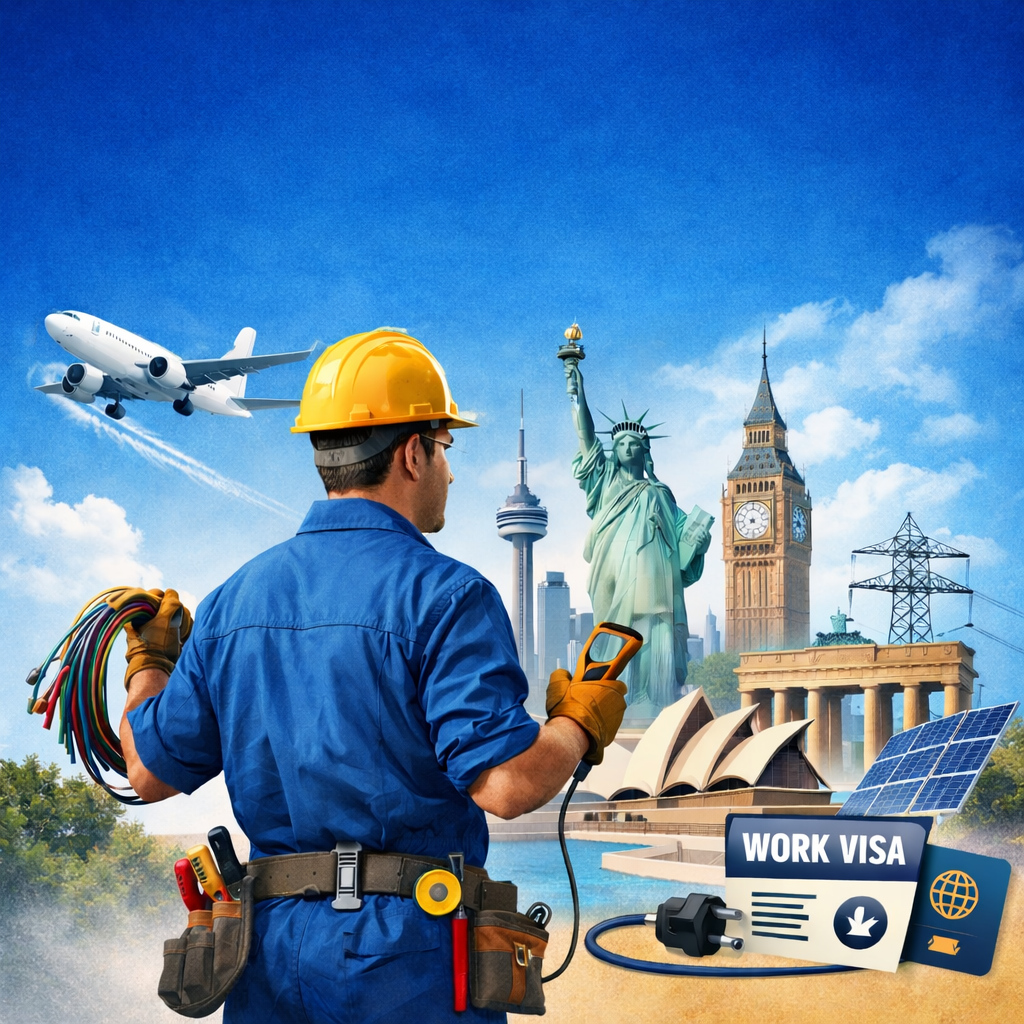
Electricians are among the most essential skilled workers in the global labor market. Every country that is expanding its infrastructure, housing, renewable energy systems, transportation networks, or industrial facilities requires qualified electricians. Unlike many office-based jobs that can be automated, electrical work requires hands-on technical expertise, safety awareness, and compliance with strict building codes. This makes electricians consistently valuable across developed and developing economies. Electrician Jobs
In countries like the Canada, Australia, United States, United Kingdom, and Germany, a major factor driving demand is workforce aging. Many licensed electricians are retiring, and fewer young people are entering skilled trades. At the same time, government-backed infrastructure investments, smart city projects, and renewable energy transitions are increasing the need for electrical installations and maintenance.
Another reason for rising demand is the global shift toward clean energy. Solar panel installations, electric vehicle charging stations, and energy-efficient building systems all require trained electricians. Countries aiming to reduce carbon emissions are investing heavily in renewable energy projects, which further boosts demand for electrical professionals.
Because of these shortages, governments have added electricians to official skilled occupation lists. This makes it easier for employers to sponsor foreign workers under work visa programs. In many cases, skilled electricians qualify for fast-track immigration pathways, making this profession one of the most reliable routes to working abroad legally.
Best Countries Offering Electrician Jobs with Visa Sponsorship
Several developed countries actively recruit foreign electricians through structured immigration systems. These nations experience persistent labor shortages in construction and infrastructure sectors, making visa sponsorship common for qualified candidates.
Electrician Jobs in Canada
Canada remains one of the top destinations for skilled trades workers. Electricians fall under Canada’s skilled trades category, and many provinces face acute shortages. Programs like the Temporary Foreign Worker Program (TFWP) and Provincial Nominee Programs (PNPs) allow employers to hire foreign electricians when local workers are unavailable.
Average salaries range from CAD $28 to $45 per hour depending on province and experience. Industrial electricians and those working in oil-rich regions like Alberta often earn higher wages. Many provinces also provide pathways from temporary work permits to permanent residency, making Canada highly attractive for long-term relocation.
Electrician Jobs in Australia
Australia consistently lists electricians on its Skilled Occupation List. Visa options such as Subclass 189, 190, and 482 allow both independent and employer-sponsored migration. Infrastructure expansion and housing demand continue to create job openings nationwide.
Electricians in Australia typically earn between AUD $70,000 and $110,000 annually. Regional areas may offer faster visa processing and additional immigration points.
Electrician Jobs in the United States
The United States has ongoing demand due to commercial construction, residential development, and industrial upgrades. Employers may sponsor skilled electricians under temporary work visas or permanent employment-based categories. Annual earnings often range between $50,000 and $85,000, with overtime opportunities increasing income significantly.
Electrician Jobs in the United Kingdom
The United Kingdom offers opportunities under its Skilled Worker visa system. Employers must hold sponsorship licenses. Salaries typically range from £30,000 to £45,000 annually, depending on region and specialization.
Electrician Jobs in Germany
Germany faces one of Europe’s biggest skilled labor shortages. Qualified electricians can apply for skilled worker visas, and knowledge of German language improves employment prospects significantly. Annual salaries usually range between €35,000 and €55,000.
Types of Electrician Jobs Abroad
Electrician jobs abroad are not limited to basic residential wiring. There are multiple specializations, and choosing the right one can significantly affect salary potential and sponsorship chances.
Residential electricians handle wiring, lighting systems, circuit installations, and electrical panel setups in homes and apartments. This is one of the most common entry points into international markets.
Commercial electricians work on office buildings, shopping centers, hospitals, and schools. These projects are usually larger and involve more complex systems, including fire alarms and data cabling.
Industrial electricians often earn higher salaries because they work in factories, power plants, and heavy machinery environments. They manage high-voltage systems, automation equipment, and production line controls.
Renewable energy electricians specialize in solar installations, wind turbines, and electric vehicle charging systems. As countries transition to clean energy, this specialization is becoming increasingly valuable.
Maintenance electricians focus on troubleshooting and repairing existing electrical systems in buildings and industrial settings. Their ability to quickly diagnose and fix faults makes them highly employable.
Choosing a specialization with global demand can increase your chances of visa sponsorship. Employers typically prioritize electricians who have experience in industrial or renewable energy sectors because these skills are harder to find locally.
Qualifications Required for Electrician Jobs Abroad
To secure electrician jobs abroad with visa sponsorship, meeting professional requirements is critical. Most countries require formal training through an apprenticeship or technical college program. A recognized trade certification significantly increases your chances of employment.
Employers generally look for at least 2–5 years of work experience. Documented experience in residential, commercial, or industrial settings strengthens your application. You should also demonstrate knowledge of electrical codes, safety regulations, and blueprint interpretation.
In countries like Australia and Canada, a skills assessment may be required before visa approval. This process verifies that your qualifications meet local standards. Some applicants may need to complete additional exams or bridging courses.
Language proficiency is also important. English-speaking countries require proof of English ability through standardized tests. In Germany, basic to intermediate German language skills may be required, especially for customer-facing roles.
Having updated certifications in workplace safety, first aid, and electrical compliance can give you an advantage. Employers want assurance that foreign workers understand safety procedures and can adapt quickly to local standards.
Step-by-Step Guide: How to Apply for Electrician Jobs Abroad
Successfully securing an electrician job abroad with visa sponsorship requires careful preparation and strategy. First, create an internationally formatted CV that highlights your certifications, years of experience, major projects handled, and technical skills. Focus on measurable achievements such as large installations completed or industrial systems maintained.
Second, research the country’s licensing requirements. Some countries require foreign electricians to undergo skills assessments before employment. Completing this step early speeds up the visa process later.
Third, search for verified employers on trusted job platforms and official government portals. Avoid recruitment agencies demanding large upfront fees. Legitimate employers typically deduct processing fees legally or cover them entirely.
Fourth, tailor each job application to match the employer’s requirements. Emphasize safety training, compliance knowledge, and hands-on experience. Prepare for technical interviews that may test your understanding of wiring systems, voltage calculations, and troubleshooting methods.
Fifth, once you receive a job offer, your employer will initiate visa sponsorship paperwork. Ensure all documents are genuine and submitted correctly to avoid delays.
Following a structured application process significantly increases your success rate and reduces the risk of scams.
Applying for Electrician Jobs Abroad with Visa Sponsorship
Electrician jobs abroad with work visa sponsorship represent one of the most realistic and accessible international career pathways for skilled trades professionals. Unlike many white-collar roles that require advanced degrees or complex licensing transfers, electricians with solid training, documented experience, and safety certification have strong global mobility opportunities.
Countries such as Canada, Australia, United States, United Kingdom, and Germany continue to experience labor shortages in construction, renewable energy, and industrial maintenance sectors. Because of this, employers are increasingly open to sponsoring qualified foreign electricians who can meet their technical and safety standards.
However, success depends on preparation. Having proper certifications, verified work experience, language proficiency, and understanding of the destination country’s licensing system will significantly improve your chances. It is also important to apply only through legitimate employers and official immigration channels to avoid fraud.
Financially, electrician roles abroad offer competitive wages, overtime opportunities, and in many cases, pathways to permanent residency. For skilled workers seeking higher income, global exposure, and long-term settlement options, this profession provides both stability and upward mobility.
If you are serious about working abroad, start by upgrading your qualifications, organizing your documents, and researching the country that best matches your experience level. With the right strategy, electrician jobs abroad with visa sponsorship can transform your career and financial future.
Frequently Asked Questions (FAQ) About Electrician Jobs Abroad with Visa Sponsorship
1. Can I get an electrician job abroad with visa sponsorship?
Yes, it is possible to get electrician jobs abroad with work visa sponsorship, especially in countries experiencing skilled labor shortages. Nations such as Canada, Australia, United Kingdom, Germany, and the United States regularly recruit foreign electricians when local supply cannot meet demand.
However, visa sponsorship is usually offered to electricians who have:
-
Recognized trade certification
-
At least 2–5 years of work experience
-
Strong knowledge of electrical systems and safety standards
-
Language proficiency (English or German depending on destination)
Employers must prove they cannot find qualified local workers before sponsoring foreign applicants. This makes your qualifications and experience extremely important. The more specialized your skills (industrial, renewable energy, high-voltage systems), the higher your chances of sponsorship.
2. Which country pays electricians the highest salary?
Electrician salaries vary depending on experience, specialization, and region. Generally, Australia and United States offer some of the highest average annual salaries, especially for industrial and specialized electricians.
In Australia, experienced electricians can earn between AUD $70,000 and $110,000 per year. In the United States, salaries typically range from $50,000 to $85,000 annually, with overtime increasing earnings significantly.
Canada also offers competitive wages, particularly in provinces with strong construction or energy sectors. Meanwhile, Germany and the United Kingdom provide stable salaries along with structured pathways to permanent residency.
The “highest-paying” country often depends on cost of living, taxation, and overtime opportunities — not just base salary.
3. Do I need a license to work as an electrician abroad?
In most countries, yes. Electricians are regulated professionals, meaning you may need to obtain local certification or pass a skills assessment before working independently.
For example:
-
In Canada, some provinces require trade certification exams.
-
In Australia, foreign electricians often undergo a skills assessment before licensing.
-
In Germany, recognition of foreign qualifications may be required.
Some employers may initially hire you as an assistant or supervised electrician until full licensing is completed. Researching the licensing requirements of your chosen country before applying is highly recommended.
4. How long does it take to get a sponsored work visa?
The processing time depends on the country and visa type. On average, it can take anywhere from 2 to 8 months.
For example:
-
Work visas in United Kingdom under the Skilled Worker route may take a few weeks after sponsorship approval.
-
In Canada, processing may take several months depending on the program.
-
In Australia, timelines vary depending on visa subclass.
Delays can occur if documentation is incomplete or if credential assessments are pending. Preparing your paperwork early speeds up the process.
5. Can electrician jobs abroad lead to permanent residency?
Yes, many countries provide pathways from temporary work visas to permanent residency for skilled trades workers.
For instance:
-
Canada offers permanent residency pathways through Express Entry and Provincial Nominee Programs.
-
Australia provides permanent visa subclasses for skilled workers.
-
Germany allows long-term residence after continuous employment.
This makes electrician jobs one of the most practical routes to long-term migration. Continuous legal employment, tax compliance, and meeting residency requirements are typically necessary for eligibility.
6. Are there scams related to electrician visa sponsorship jobs?
Unfortunately, yes. Because electrician jobs abroad are in high demand, fraudulent recruiters may promise guaranteed visas in exchange for large upfront payments.
To avoid scams:
-
Never pay large “processing fees” to individuals
-
Apply through verified employers
-
Use official government immigration websites
-
Confirm employer sponsorship licenses
-
Avoid job offers without formal contracts
Legitimate employers typically provide official offer letters and clear visa documentation. Always verify information independently before making financial commitments.
7. What specialization increases my chances of visa sponsorship?
Specializations that increase sponsorship opportunities include:
-
Industrial electrical systems
-
Renewable energy installations (solar and wind)
-
High-voltage systems
-
Automation and control systems
-
Commercial infrastructure wiring
Countries investing in renewable energy and industrial expansion actively seek electricians with these advanced skills. Upskilling in these areas can significantly improve your global employability.